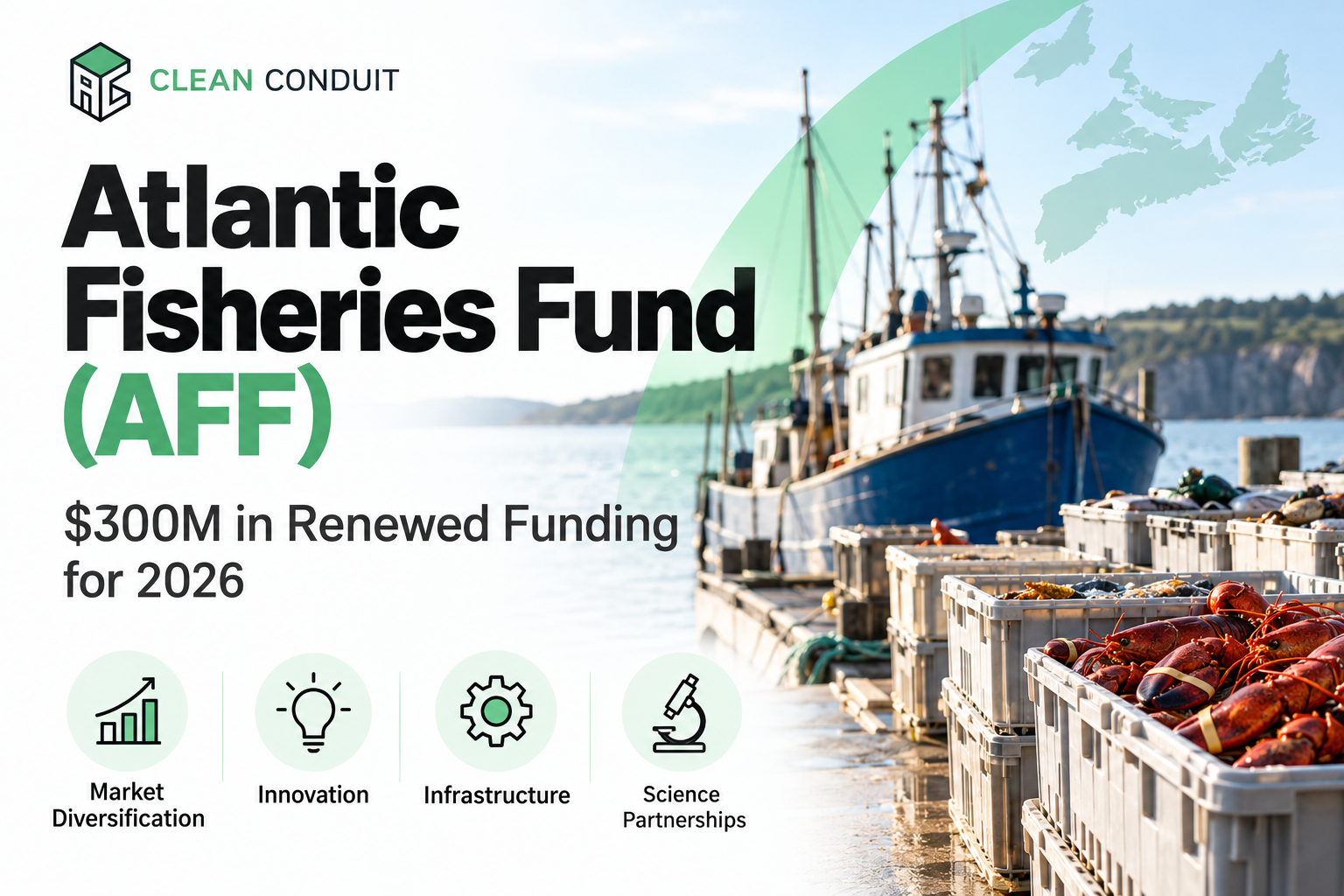
The Atlantic Fisheries Fund (AFF) has been renewed with over $300 million in funding over five years to help Atlantic Canada’s fish and seafood sector modernize operations, improve productivity, develop new products and expand into new markets.
Announced on October 15, 2026, the renewed AFF supports fish and seafood harvesting, processing and aquaculture businesses across Nova Scotia, New Brunswick, Prince Edward Island and Newfoundland and Labrador.
The program also introduces a new Market Diversification pillar, expanding opportunities for seafood businesses seeking to reduce exposure to international trade disruptions and strengthen their competitiveness.
Applications are now open, making this an opportunity for eligible organizations planning capital investments, technology upgrades, research projects or market expansion initiatives.
What Is the Atlantic Fisheries Fund?
The AFF is a joint federal-provincial funding program administered by Fisheries and Oceans Canada (DFO) in partnership with the four Atlantic provinces.
Its aim is to help Canada’s fish and seafood sector meet growing demand for high-value, high-quality and sustainably sourced products in domestic and international markets.
AFF funding supports projects that strengthen productivity, sustainability, innovation and economic growth throughout the Atlantic region.
The program also contributes to the long-term viability of coastal communities by supporting businesses and organizations involved in fisheries, seafood processing and aquaculture.
Atlantic Fisheries Fund at a Glance
Program detail | Description |
|---|---|
Funding available | Over $300 million |
Program duration | Five years |
Application status | Open since October 15, 2026 |
Funding partners | Federal and provincial governments |
Federal contribution | 60% of program funding |
Provincial contribution | 40% of program funding |
Participating provinces | NS, NB, PEI, NL |
Funding pillars | Market Diversification, Innovation, Infrastructure and Science Partnerships |
Administrator | Fisheries and Oceans Canada |
Important: The 60% federal and 40% provincial contributions describe how governments finance the fund. They do not represent the funding percentage available to an individual applicant.
What’s New in the Renewed Atlantic Fisheries Fund?
According to the October 15, 2026 news release, the renewed AFF builds on the original program introduced in 2017.
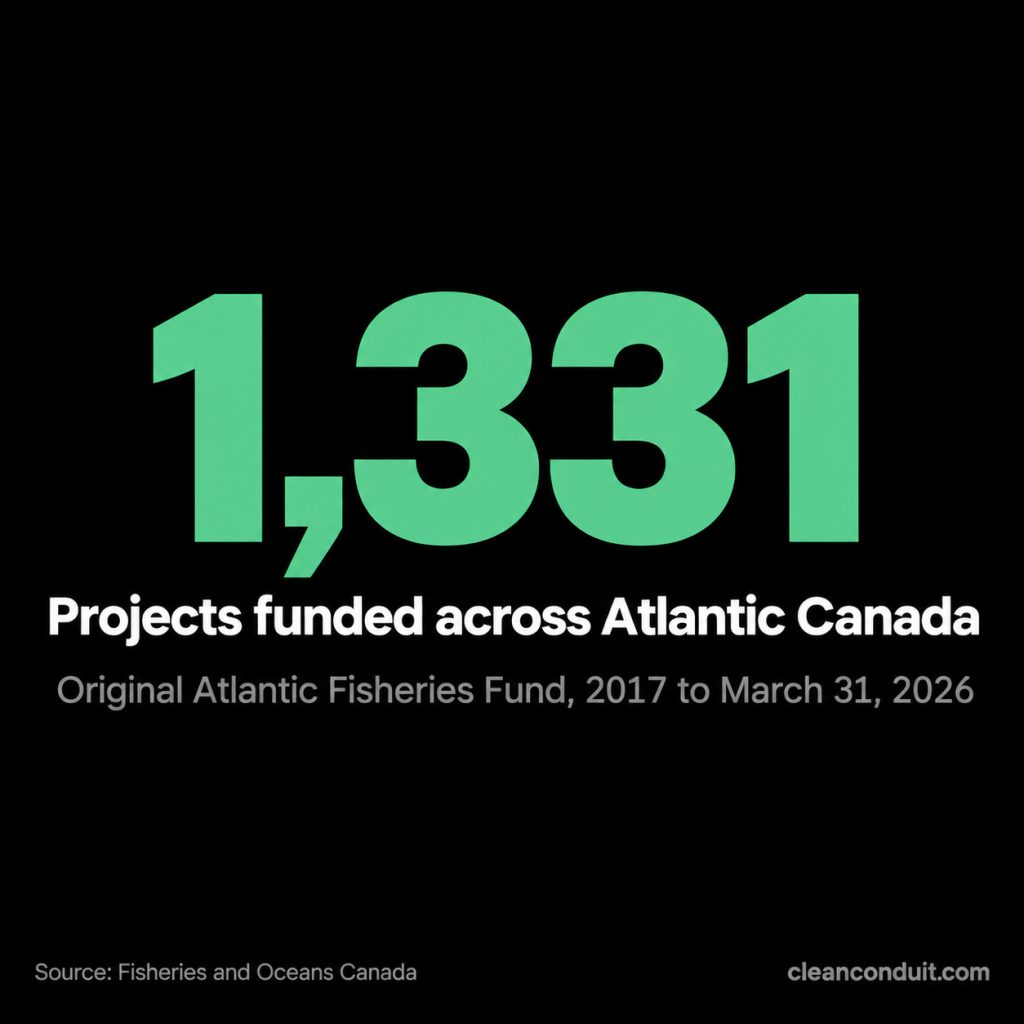
The previous fund supported 1,331 projects across Atlantic Canada through March 31, 2026, including investments in processing equipment, seafood quality, vessel upgrades and scientific research.
The renewed program continues supporting these activities while introducing a fourth funding pillar focused specifically on market development and diversification.
This new pillar helps seafood businesses identify new customers, develop market-specific products, obtain certifications and expand beyond traditional export markets.
Existing opportunities under Innovation, Infrastructure and Science Partnerships remain available.
How Much AFF Funding Is Available?
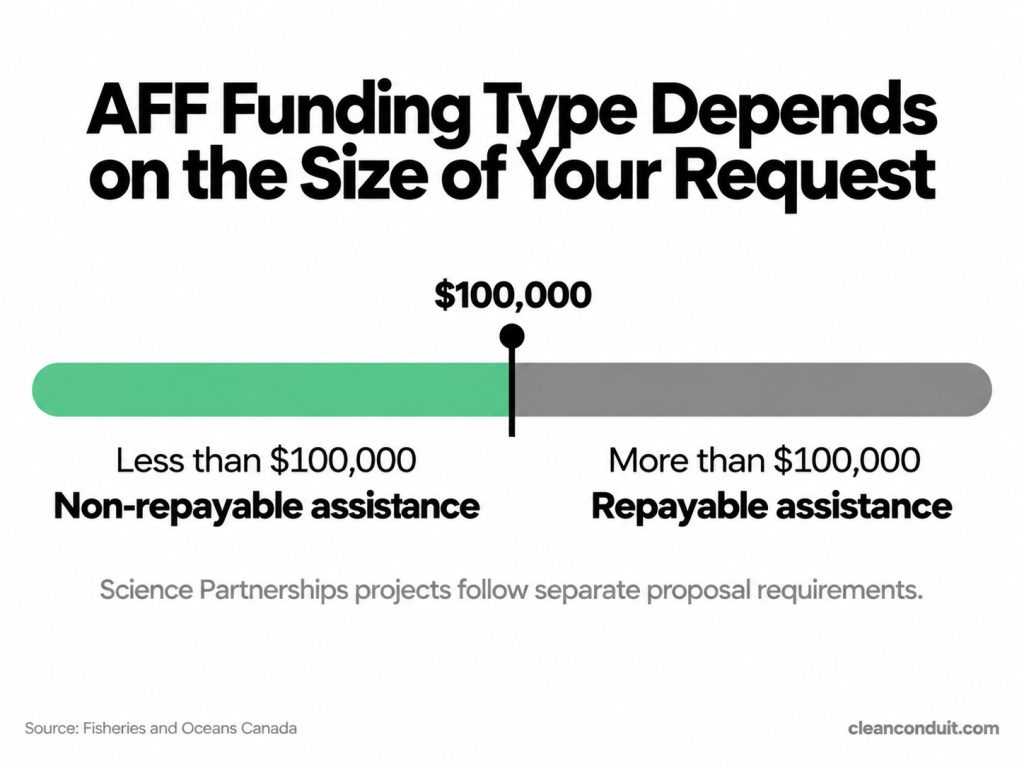
The renewed AFF will invest more than $300 million over five years, although the amount available to an individual project depends on its scope, applicant type and funding assessment.
Fisheries and Oceans Canada has published separate proposal guidelines for different levels and types of assistance:
Funding request | Published proposal guidance |
|---|---|
Less than $100,000 | Non-repayable assistance |
More than $100,000 | Repayable assistance |
Science Partnerships | Separate proposal requirements |
Applicants seeking exactly $100,000 should confirm the applicable requirements with DFO, as the published guidelines distinguish requests below and above that amount.
Non-repayable funding generally does not need to be repaid when the recipient complies with the contribution agreement.
Repayable funding requires repayment according to the terms established in the agreement. Larger commercial projects must demonstrate financial viability and the ability to meet repayment obligations.
The funding amount and eligible project costs are determined through the application and assessment process.
Applicants should therefore establish a realistic project budget, identify their own financing contribution and confirm the applicable funding terms before committing to an investment.

How Clean Conduit Can Help Secure Atlantic Fisheries Fund Support
Clean Conduit helps businesses identify and pursue government funding opportunities for strategic capital investments, technology adoption, productivity improvements and business expansion.
For organizations considering the AFF, our team can work with management to define an eligible project scope, assess potential funding fit, identify relevant expenditures and develop the business case supporting an application.
We can also assist with financial projections, project budgets, supplier documentation and application preparation to help position an investment for funding consideration.
Planning a seafood processing upgrade, equipment investment or market expansion project? Contact Clean Conduit to discuss your project and potential AFF funding opportunities.
Who Are the Eligible Recipients for AFF Funding?
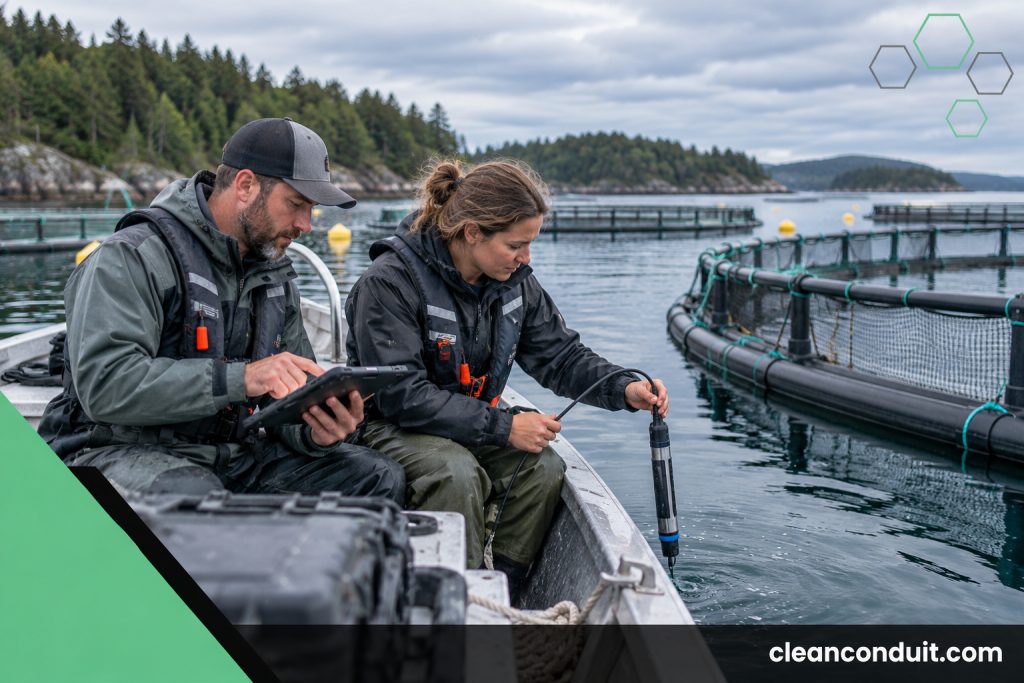
The AFF supports both commercial enterprises and non-commercial organizations involved in Canada’s fish and seafood sector.
Eligible recipients must reside in a participating Atlantic province or represent a national or regional fish and seafood sector interest.
They must also be active in, or support activities related to, fish and seafood harvesting, processing or aquaculture.
Commercial Enterprises
Eligible commercial applicants include:
Incorporated seafood harvesting, processing and aquaculture businesses
Sole proprietorships
Partnerships owned by more than one individual
Co-operatives
Applicable Indigenous individuals, organizations and commercial groups
Non-Commercial Organizations
Eligible non-commercial applicants include:
Industry associations
Not-for-profit organizations
Post-secondary institutions
Research and innovation institutions
Academics and research organizations
Provincial Crown corporations
Indigenous organizations and groups that are not commercial enterprises
Organizations undertaking research, scientific development or other support activities related to the fish and seafood sector may also qualify.
All eligible recipients must have the legal capacity to enter into a contribution agreement.
Eligibility as an organization does not guarantee funding. The proposed project must also satisfy program objectives and assessment requirements.
Which Atlantic Provinces Are Eligible?
AFF funding is available to eligible applicants and projects associated with four participating Atlantic provinces:
Nova Scotia
New Brunswick
Prince Edward Island
Newfoundland and Labrador
The same four funding pillars apply throughout the participating provinces.
However, project assessments may consider regional priorities, and participating provincial governments can identify strategic initiatives for funding consideration.
What Projects Does the Atlantic Fisheries Fund Support?
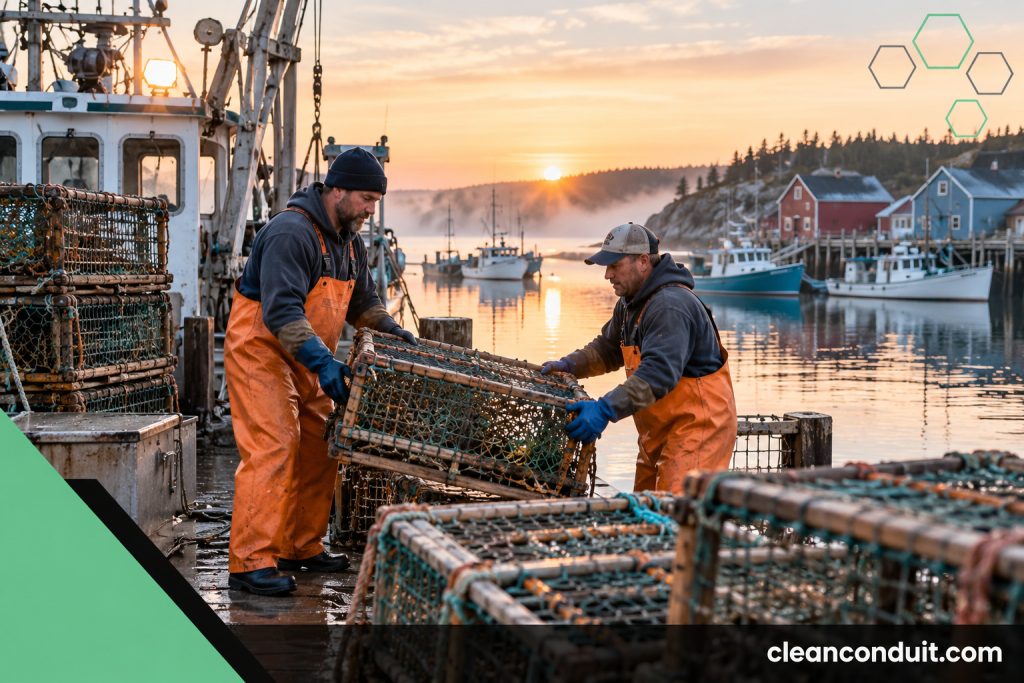
The renewed AFF supports eligible projects under four main pillars: Market Diversification, Innovation, Infrastructure and Science Partnerships.
Each pillar focuses on different activities intended to improve the competitiveness, sustainability and long-term development of Canada’s fish and seafood sector.
1. Market Development and Diversification
The new Market Diversification pillar supports initiatives that help Canada’s fish and seafood sector access domestic and international markets.
Its objective is to improve market resilience, strengthen product recognition and reduce dependence on individual export destinations.
Eligible activities may include:
Market research, analysis and readiness activities, including the use of in-market contractors
National or export-focused advertising and promotional initiatives
Development of market-specific packaging and branding
Product certifications, catch traceability and eco-labelling initiatives
Research into regulatory standards and market access requirements
Trade shows, trade missions and initiatives that improve market access
2. Innovation
The Innovation pillar encourages the development and commercialization of new technologies, products and processes that contribute to the sustainability of the fish and seafood sector.
Eligible activities may include:
Research and development of innovations that support the sustainability of the sector
Pilot projects and testing of new innovations
Activities that introduce innovations to market
Development of partnerships and networks that promote innovation within the industry
Projects must align with the program’s objectives and demonstrate how the proposed innovation benefits the fish and seafood sector.
3. Infrastructure
The Infrastructure pillar supports investments in technologies, equipment and processes that improve the effectiveness and sustainability of fish and seafood harvesting, processing and aquaculture operations.
Eligible activities may include:
Adoption of new technologies, processes or equipment
Adaptation of existing technologies, processes or equipment to improve operations
Training associated with adopting new technologies, processes or equipment
The pillar focuses on investments that strengthen industry operations through technology adoption and process improvements.
4. Science Partnerships
The Science Partnerships pillar supports collaborative research and scientific initiatives involving the fisheries and aquaculture industries, academia and other research institutions.
These projects aim to improve scientific understanding of changing marine environments and support sustainable fisheries.
Eligible activities may include:
Research examining the effects of ecosystem shifts on fish stocks, their distribution and commercial fisheries
Scientific activities supporting the development of sustainable harvesting technologies
Development of partnerships and networks that support scientific activities aligned with the program’s objectives
Science Partnerships initiatives are intended to strengthen collaboration between industry and research organizations while addressing challenges affecting the long-term sustainability of Atlantic fisheries.
Summary of Eligible Activities
Funding pillar | Eligible activities |
|---|---|
Market Diversification | Market research, advertising, branding, certifications and export development |
Innovation | Research and development, pilot testing, commercialization and innovation partnerships |
Infrastructure | Technology and equipment adoption, process improvements and associated training |
Science Partnerships | Ecosystem research, sustainable harvesting technologies and scientific collaborations |
Note: These activities reflect the categories identified by Fisheries and Oceans Canada. Project eligibility and eligible expenditures are assessed individually, and inclusion in these categories does not guarantee funding approval.
What Costs May Qualify for Atlantic Fisheries Fund Funding?
Eligible expenditures depend on the nature of the project and the applicable funding pillar.
Depending on the approved scope, potentially supportable activities may involve:
Purchasing and installing new technologies or equipment
Research and development activities
Innovation pilots and testing
Training associated with technology adoption
Market research and commercialization activities
Export promotion and market development
Product certification and related market access initiatives
Qualified scientific research and collaboration activities
Not every expense associated with these activities is automatically eligible.
Applicants should prepare an itemized budget and confirm eligibility with Fisheries and Oceans Canada before making financial commitments.
The specific eligible costs approved for reimbursement or contribution payments will be documented in the project’s funding agreement.
How to Apply for the Atlantic Fisheries Fund Through Fisheries and Oceans Canada
Applications to the renewed AFF opened on October 15, 2026.
Fisheries and Oceans Canada administers the application process, working with participating provincial governments.
Step 1: Confirm Eligibility
Review the applicant requirements and determine whether your proposed initiative aligns with one of the program’s four funding pillars.
Consider whether the project supports measurable improvements in productivity, sustainability, innovation, market access or scientific understanding.
Step 2: Define the Project Scope
Develop a clear description of the proposed investment, including its objectives, activities, timeline and expected benefits.
Explain the challenge or business opportunity being addressed and how the project contributes to the seafood sector.
Step 3: Prepare the Budget and Financing Plan
Estimate total project costs, identify potentially eligible expenditures and obtain relevant supplier quotes.
Applicants should also establish the sources of funding needed to complete the project, including internal financing and any other government support.
Step 4: Develop the Proposal and Business Plan
Prepare the proposal using the applicable DFO guidelines.
Depending on the type and size of funding requested, documentation may include:
Project description and implementation schedule
Business plan and market analysis
Financial statements and projections
Supplier quotes and technical specifications
Project costs and financing sources
Ownership and management information
Required licences and permits
Supporting research or partnership documentation
For larger repayable projects, applicants must provide more extensive financial information demonstrating commercial viability and repayment capacity.
Step 5: Submit the Application
Applicants must submit the completed AFF application form, the appropriate proposal and business or marketing plan, and supporting documentation.
Applications can be submitted through the methods permitted by DFO, including paper or electronic submission.
DFO advises applicants to protect sensitive financial and personal information when submitting electronically.
The department states that it will acknowledge application receipt within five business days.
Step 6: Application Review and Funding Agreement
Fisheries and Oceans Canada reviews applications to confirm applicant eligibility, project feasibility, alignment with program objectives and potential economic benefits.
Projects may receive priority if they support regional strategic objectives.
Successful applicants are contacted to establish a contribution agreement outlining the approved funding and associated requirements.
How to Strengthen an Atlantic Fisheries Fund Application
A competitive AFF application should demonstrate more than the need to purchase equipment or expand operations.
Applicants should clearly explain how their investment supports the program’s objectives and creates measurable benefits for the fish and seafood sector.
Important considerations include:
- Demonstrate a clear business need. Explain the operational challenge, market opportunity or industry constraint that the proposed project addresses.
- Quantify expected improvements. Where possible, include measurable outcomes such as increased processing capacity, reduced waste, improved product quality, greater productivity or access to new markets.
- Establish financial feasibility. Provide a realistic budget, credible cost estimates, financial projections and evidence of the organization’s ability to complete the project.
- Explain sustainability benefits. Identify how the investment improves resource efficiency, reduces waste, supports sustainable harvesting or strengthens long-term economic sustainability.
- Align with regional priorities. Show how the project contributes to industry development, competitiveness and economic opportunities within the participating Atlantic provinces.
Organizations considering significant capital investments should ideally begin developing their project scope and business case before making binding financial commitments.
Atlantic Fisheries Fund FAQs
Yes. The Government of Canada announced on October 15, 2026, that the renewed Atlantic Fisheries Fund had begun accepting applications.
The fund will provide over $300 million in support over five years.
AFF offers different types of financial assistance.
DFO provides non-repayable proposal guidelines for funding requests below $100,000 and repayable assistance guidelines for requests above $100,000.
Science Partnerships projects have separate proposal requirements. Applicants should confirm the applicable funding structure before applying.
Yes. Eligible commercial seafood processing enterprises in participating Atlantic provinces can apply for support.
Projects involving equipment modernization, innovation, market development and productivity improvements may qualify when they satisfy the relevant funding criteria.
Yes. Aquaculture is one of the three principal industry areas supported by the fund, alongside fish and seafood harvesting and processing.
Eligible aquaculture projects may involve innovative technologies, infrastructure improvements, scientific research or market diversification.
Yes. Eligible non-commercial recipients include industry associations, post-secondary institutions, research institutions, Indigenous organizations and certain other non-commercial organizations.
Applicants must meet the sector-related eligibility conditions and have the legal capacity to enter into a contribution agreement.
Yes. Market Development and Diversification is a new pillar of the renewed program.
It supports eligible activities such as export marketing, market research, product branding, certification and initiatives that help Canadian fish and seafood products enter new markets.
The program generally requires recipients to reside in Nova Scotia, New Brunswick, Prince Edward Island or Newfoundland and Labrador.
However, organizations representing a national or regional fish and seafood sector interest may also qualify if they meet the applicable activity and eligibility requirements.
Fisheries and Oceans Canada administers the program in partnership with the governments of Nova Scotia, New Brunswick, Prince Edward Island and Newfoundland and Labrador.
Applicants can contact AFF staff at 1-844-795-9718 for program information and assistance.
Planning an Investment Under the Atlantic Fisheries Fund
The renewed AFF provides an opportunity for businesses and organizations across Atlantic Canada to pursue investments that improve productivity, advance innovation, develop new markets and strengthen sustainable seafood production.
With more than $300 million available over five years, eligible applicants can explore support for projects ranging from equipment modernization and new product development to export initiatives and scientific partnerships.
Organizations considering AFF funding should begin by defining their project scope, confirming eligibility, developing a financial plan and gathering the supporting information needed for an application.
Clean Conduit can assist with these steps, helping organizations assess funding opportunities and build a structured business case for their proposed investment.
Note: Program guidelines and status may have changed since the publishing of this article. Always confirm with official sources before proceeding with an application.