Ontario businesses investing in artificial intelligence may qualify for significant federal financial assistance through the Regional Artificial Intelligence Initiative (RAII).
The program helps Canadian companies adopt AI technologies, improve productivity, develop new products and bring Canadian-made AI technologies to domestic and international markets.
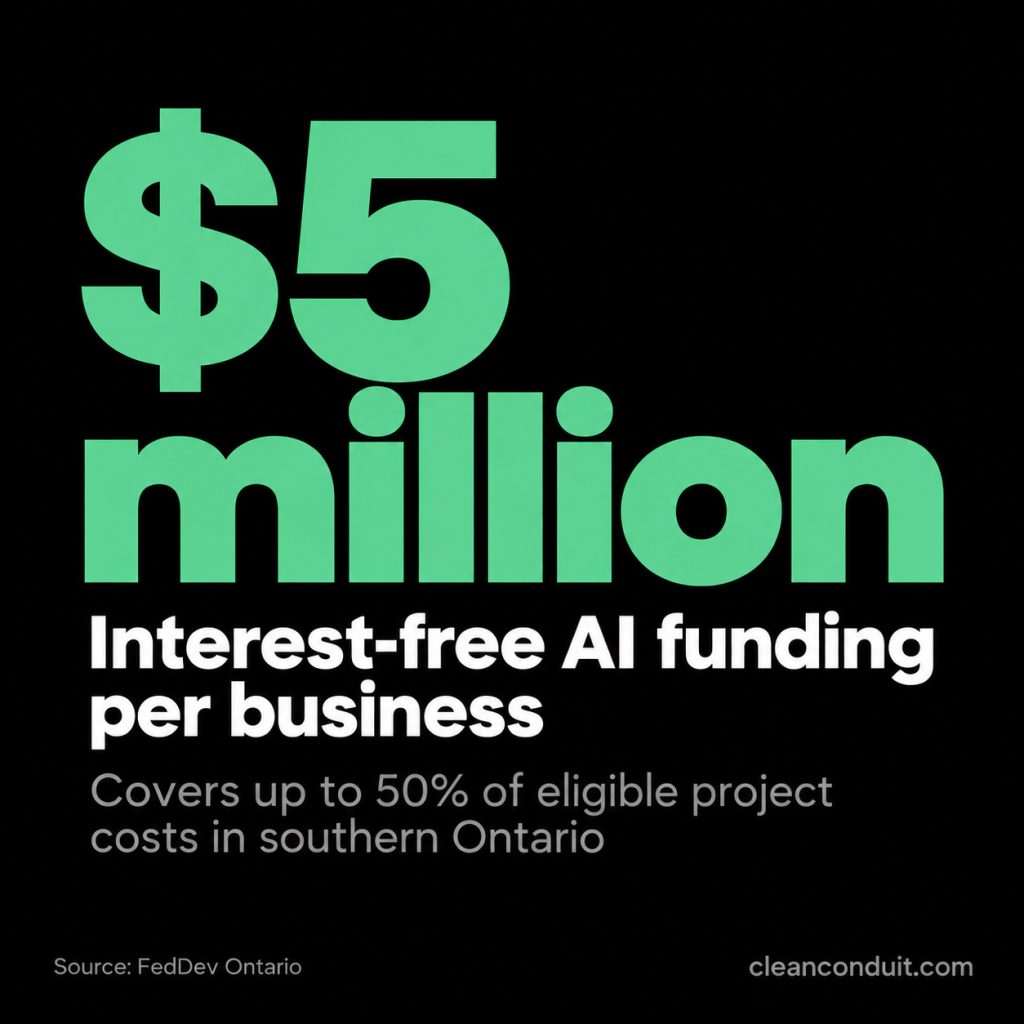
For eligible businesses in southern Ontario, RAII offers $125,000 to $5 million in interest-free, repayable funding, covering up to 50% of eligible project costs.
Qualifying not-for-profit organizations can access non-repayable funding of up to $10 million for larger AI ecosystem projects.
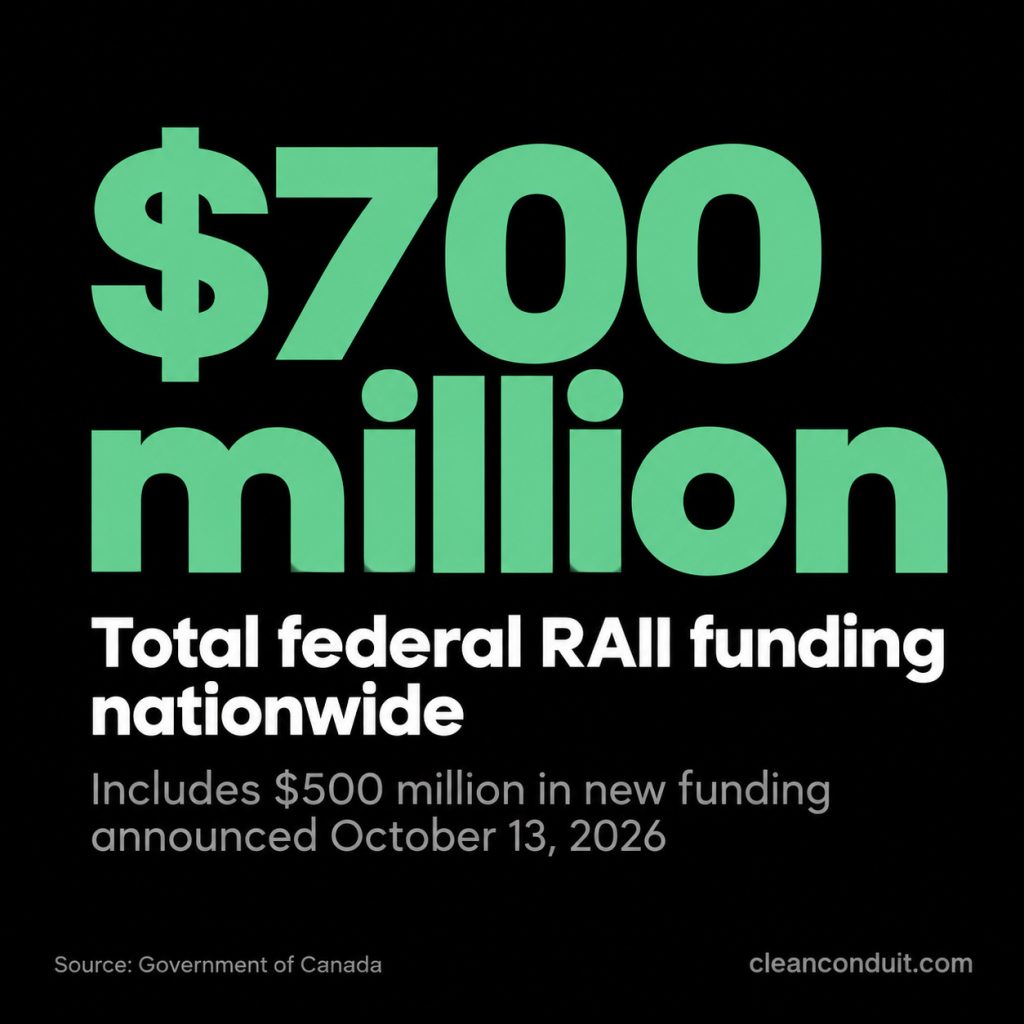
On October 13, 2026, the federal government announced an additional $500 million over five years for RAII, bringing total federal funding to $700 million nationwide.
This guide explains RAII funding Ontario eligibility, available funding amounts, eligible projects and costs, application deadlines, and how to prepare a competitive proposal.
What Is the Regional Artificial Intelligence Initiative (RAII)?
The Regional Artificial Intelligence Initiative is a federal government funding program designed to accelerate AI adoption and commercialization across Canada.
Delivered through Canada’s regional development agencies, the initiative helps businesses and organizations integrate AI into their operations while supporting Canadian AI companies in bringing innovative technologies to market in a timely manner.
The expanded initiative is part of Canada’s AI for All national artificial intelligence strategy and focuses on three objectives:
AI adoption: Helping businesses and organizations adopt and integrate AI technologies to improve productivity, competitiveness and resilience.
AI commercialization: Helping Canadian AI companies validate, commercialize and scale their AI technologies and solutions.
AI ecosystem development: Strengthening regional organizations that provide the expertise, technical services and business support needed for broader AI adoption and commercialization.
The program prioritizes strategic AI adoption in sectors where Canada has established economic strengths, including manufacturing, healthcare, agriculture, transportation, energy and natural resources.
Rather than funding AI experimentation alone, RAII emphasizes measurable business outcomes and projects that can strengthen regional technology ecosystems.
RAII Funding Ontario: How Much Funding Is Available?
RAII funding amounts depend on the applicant’s location, organizational structure and project objectives.
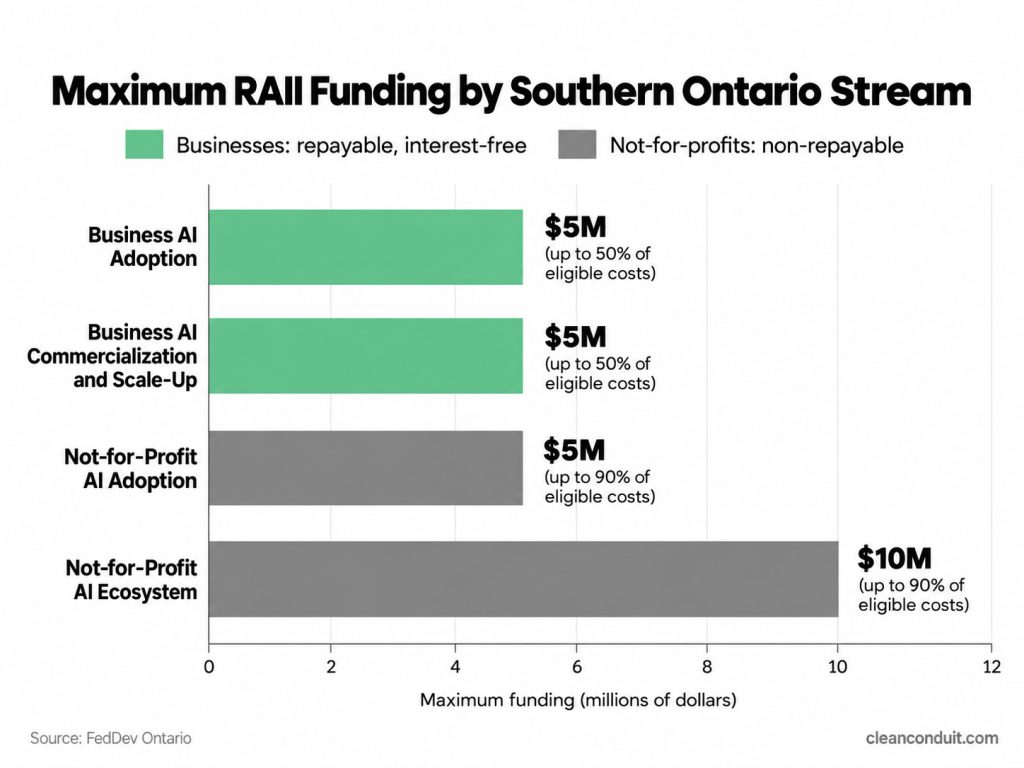
In southern Ontario, the Federal Economic Development Agency for Southern Ontario (FedDev Ontario) offers the following funding:
Funding stream | Maximum RAII funding |
|---|---|
Business AI Adoption | $5 million; up to 50% of eligible costs |
Business AI Commercialization and Scale-Up | $5 million; up to 50% of eligible costs |
Not-for-Profit AI Adoption | $5 million; up to 90% of eligible costs |
Not-for-Profit AI Ecosystem | $10 million; up to 90% of eligible costs |
Each southern Ontario stream has a minimum funding request of $125,000.
For-profit contributions are fully repayable and interest-free, with repayment normally beginning one year after project completion.
Contributions to eligible not-for-profit organizations are non-repayable.
Northern Ontario projects follow separate FedNor rules.
FedNor normally provides repayable contributions covering up to 50% of eligible costs for businesses and non-repayable contributions covering up to 90% for not-for-profit organizations.
FedNor also limits combined government assistance to 50% of eligible capital costs and 75% of other eligible costs for business projects.
These government assistance limits should not be confused with FedNor’s own contribution rate.
Funding decisions depend on project merit, financial need and funding availability. Applicants should not assume that a qualifying project will automatically receive the maximum contribution.
Which Regional Development Agency Administers RAII in Ontario?
The Regional Artificial Intelligence Initiative operates nationally, but applications are managed regionally.
Ontario businesses must identify which regional development agency serves their project.
Southern Ontario: FedDev Ontario
FedDev Ontario administers RAII for businesses and organizations located and operating in southern Ontario.
Its current funding streams support established small and medium-sized enterprises adopting AI, AI companies commercializing technologies, and qualifying organizations supporting the wider AI ecosystem.
See also: FedDev Ontario Funding for Manufacturers: Programs, Eligible Costs and Funding Limits
Northern Ontario: FedNor
FedNor administers RAII for Northern Ontario, including eligible projects that generate economic benefits within the region.
FedNor’s program supports AI adoption, commercialization and AI ecosystem activities involving sectors such as manufacturing, mining, forestry, agriculture and health sciences.
Applicants should demonstrate meaningful Northern Ontario benefits, with their location and proposed activities assessed against FedNor’s program requirements.
The requirements are not identical. An applicant eligible under FedNor may not meet FedDev Ontario’s operating history or employee thresholds, and vice versa.
RAII Eligible Applicants: Small and Medium-Sized Enterprises
The RAII program supports eligible Canadian companies and organizations with the capacity to implement, commercialize or support AI technologies.
However, eligibility differs significantly between southern and Northern Ontario.
Eligible Applicants in Southern Ontario
For-profit applicants to FedDev Ontario must be incorporated and registered to do business in Canada or Ontario, operate in southern Ontario, and meet the requirements for their chosen stream.
Requirement | AI Adoption | AI Commercialization |
|---|---|---|
Minimum operating history | 3 years | 1 year |
Minimum employment | 5 full-time equivalent employees | 1 full-time equivalent employee in southern Ontario |
Maximum employment | Fewer than 500 full-time equivalent employees overall | Fewer than 500 full-time equivalent employees overall |
Eligible business type | Incorporated for-profit business, subject to program requirements | Incorporated for-profit business, subject to program requirements |
Funding | Up to $5 million | Up to $5 million |
Applicants must also demonstrate appropriate intellectual property rights and a commitment to responsible AI development and use.
For AI adoption, FedDev Ontario prioritizes transformative projects that go beyond simply purchasing commonly available AI tools.
For AI commercialization, the focus is on companies with technologies sufficiently developed for validation, deployment and market growth.
Eligible Applicants in Northern Ontario
FedNor identifies the following potential eligible applicants:
Incorporated small and medium-sized enterprises
Incorporated not-for-profit organizations
Indigenous communities and organizations
Municipalities and municipal organizations
All eligible applicants must be legal entities capable of entering into legally binding agreements.
FedNor also expects evidence of a sustainable business model, normally supported by two years of operations, alongside sufficient financial, managerial, technical and operational capacity.
Applicants must provide a viable project plan supported by verifiable cost estimates, demonstrate financial capacity and explain how the project will benefit Northern Ontario.
Importantly, FedNor explicitly excludes retail and service-based businesses from its RAII program. This exclusion should not automatically be applied to southern Ontario, where FedDev Ontario publishes different eligibility rules and sector priorities.
RAII Funding for Not-for-Profit Organizations
Not-for-profit organizations are an important part of the Regional Artificial Intelligence Initiative because they can help many businesses adopt and commercialize AI technologies.
In southern Ontario, eligible organizations may apply through two funding streams.
- AI Adoption: Supports qualifying organizations implementing AI within their own operations. Applicants generally need at least three years of operations, five full-time equivalent employees and $1 million in annual revenue or operating expenses.
- AI Ecosystem: Supports organizations delivering broader initiatives that help multiple businesses access AI expertise, testing services, training, commercialization support and other innovation services.
Applicants need at least five full-time equivalent employees, $1 million in annual revenue or operating expenses, and an established track record of serving multiple businesses or ecosystem participants.
Organizations can apply under one of these southern Ontario streams, but not both simultaneously.
In Northern Ontario, FedNor also supports incorporated not-for-profit organizations pursuing eligible AI adoption, commercialization support or ecosystem development activities.
Eligible Projects Under the RAII
Eligible projects generally fall into three categories: AI adoption, AI commercialization and AI ecosystem development.
Projects should demonstrate clear economic benefits, rather than simply introducing new technology for its own sake.
1. AI Adoption and Strategic AI Integration
The AI Adoption stream supports projects that integrate artificial intelligence into existing business processes to improve productivity, efficiency and competitiveness.
Examples include:
Manufacturing automation: Integrating AI-enabled robotics, automated quality inspection or machine-learning systems into production.
Predictive maintenance: Using equipment data to anticipate failures, reduce downtime and improve asset utilization.
Supply chain optimization: Applying AI to demand forecasting, inventory management, procurement and logistics.
Data modernization: Upgrading data management platforms, governance processes and digital infrastructure to support AI implementation.
Decision-support systems: Using predictive analytics and AI technologies to improve operational planning.
Organizational readiness: Developing employee capabilities, cybersecurity protections and governance frameworks needed for responsible AI adoption.
For example, an Ontario manufacturer could undertake a project to integrate machine vision and predictive analytics into its production equipment, with measurable targets for reducing scrap rates and improving throughput.
A strong AI adoption project connects the investment to specific operational problems and measurable improvements in business performance.
2. AI Commercialization and Scale-Up
RAII also supports Canadian AI companies bringing AI technologies and solutions to market.
Eligible projects may involve technology validation, product refinement, demonstration, pilot deployments, market entry and business expansion.
Activities can include commercialization costs, intellectual property protection, customer validation, product testing, supply chain integration, specialized technical services and scaling the infrastructure required to serve additional customers.
For southern Ontario, FedDev Ontario generally considers commercialization projects at Technology Readiness Level (TRL) 6 or higher.
FedNor specifies TRL 7 or higher for Northern Ontario commercialization projects.
These requirements reflect the program’s emphasis on technological development approaching commercial deployment rather than early-stage basic research.
Companies should demonstrate credible customer demand, commercialization potential and opportunities for growth in domestic markets, export markets or global value chains.
3. AI Ecosystem and Capacity Development
AI ecosystem activities focus on helping other businesses and organizations adopt or commercialize AI.
Eligible initiatives may include sector-specific training programs, AI technology demonstration, testing environments, technical advisory services, innovation partnerships and business and capacity development.
For example, an industry association could develop an AI demonstration and adoption program to help regional manufacturers evaluate solutions, develop implementation strategies and connect with Canadian technology suppliers.
These projects can strengthen the economy by making AI expertise and resources accessible to a wider group of companies.
RAII Eligible Project Costs: What Expenses Can Be Funded?
Eligible project costs must be reasonable, verifiable and directly related to approved activities.
Eligible expenses vary by funding agency and project stream, but may include the following categories.
Cost category | Examples of potentially eligible expenses |
|---|---|
Capital equipment | AI-related machinery, robotics, specialized hardware and software |
Labour | Project-specific direct labour, incremental salaries and benefits |
Professional services | Technical services fees, engineering, AI integration and subcontractor costs |
Data infrastructure | Eligible data management platforms, cybersecurity systems and AI infrastructure |
Development and testing | Prototyping, technology validation, demonstration and testing services |
Commercialization | Eligible intellectual property, product demonstration and market development costs |
Training | Employee training, AI expertise and talent development costs |
Specialized services | Technical or innovation services and other specialized project activities |
For Northern Ontario, FedNor explicitly includes incremental and measurable operating costs necessary for AI projects, including certain hardware, software, data and infrastructure expenses.
FedDev Ontario similarly recognizes incremental project expenses, but excludes ongoing operating or production costs.
Ineligible Costs
Commonly ineligible costs include:
Routine operating expenses and general administrative overhead unrelated to the project
Regularly scheduled equipment replacement
Land and building acquisition
Refinancing existing debt
Routine software subscriptions and licence renewals
General-purpose equipment without a direct eligible project purpose
Expenses not reasonably connected to the proposed AI implementation or commercialization activities
Costs of preparing the funding application
Certain expenditures may be treated differently depending on the agency and project.
For example, a new software platform essential to implementing an AI solution may be eligible, whereas an ordinary subscription renewal may not qualify.
Businesses should establish a detailed budget and confirm eligible costs before making significant financial commitments.
Responsible Artificial Intelligence: A Key RAII Requirement
Supporting responsible AI adoption is a core objective of the expanded initiative.
Applicants should demonstrate how their AI projects will protect sensitive information, manage operational risks and incorporate appropriate human oversight.
Depending on the project, this can involve:
Cybersecurity and data privacy measures
Data quality, governance and access controls
Transparency and accountability in AI-assisted decision-making
Fairness and measures to reduce unintended bias
Intellectual property ownership and licensing
Employee training, change management and appropriate human oversight
Responsible AI should be incorporated into the project scope, budget and implementation plan rather than treated as a separate consideration after deployment.
Applicants also need to demonstrate compliance with relevant legal and regulatory requirements.
RAII Funding Availability and Application Deadlines
Funding availability and application deadlines depend on the regional development agency administering the program.
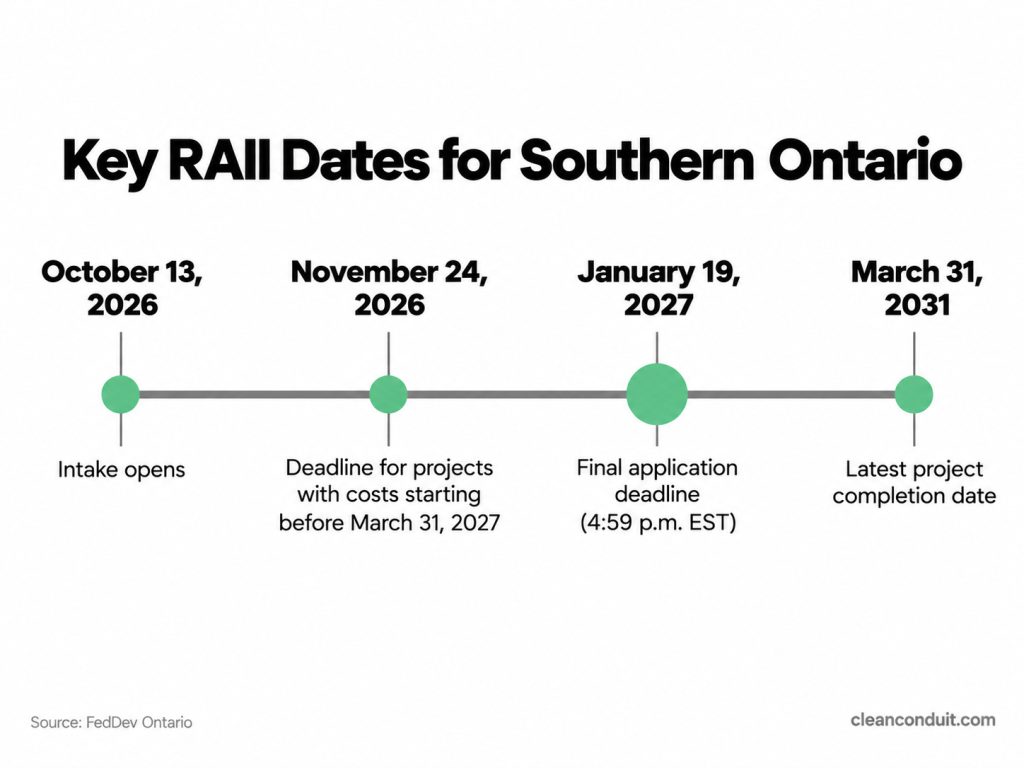
As of October 13, 2026, the following timelines are relevant.
Date | Requirement |
|---|---|
October 13, 2026 | Southern Ontario RAII intake opened |
November 24, 2026 | Earlier FedDev Ontario deadline for proposed projects with eligible costs starting before March 31, 2027 |
January 19, 2027 | Final application deadline for the current FedDev Ontario intake, at 4:59 p.m. EST |
March 31, 2031 | Latest project completion date under current FedDev Ontario guidelines |
FedNor assesses applications as they are received, subject to its published requirements and funding availability.
Northern Ontario applicants should consult FedNor directly for current intake availability and project timing.
The December 31, 2029 application deadline appearing in some federal RAII materials belongs to the PrairiesCan intake and is not the deadline for FedDev Ontario applications.
The southern Ontario intake also allows projects to begin up to 12 months before the application date, subject to eligibility rules.
However, expenses incurred before approval remain at the applicant’s risk and funding is not guaranteed.
Because government funding can become fully committed, applicants should prepare their projects and supporting documents early.
RAII Application Process: How to Apply in Ontario
Preparing an effective RAII application requires a well-defined project scope, credible financial information and measurable economic outcomes.
Step 1: Confirm Eligibility and Select the Right Stream
Begin by identifying the federal economic development agency responsible for your region.
Determine whether the project primarily involves AI adoption, AI commercialization or AI ecosystem development.
Review applicable requirements for operating history, employee count, legal structure, technology readiness and regional economic benefits.
In Northern Ontario, applicants are strongly encouraged to contact FedNor at 1-877-333-6673 for proposal discussions.
Step 2: Develop the Project Scope
Describe the business problem, the proposed AI solution and the expected improvement.
A strong project scope should explain the activities to be completed, the technology being implemented, the roles of project partners and the outcomes management expects to achieve.
Include a realistic implementation schedule, clear milestones and measurable performance indicators.
For AI adoption, these indicators could include improvements in productivity, production capacity, process efficiency or operating costs.
For commercialization projects, indicators may include customer acquisition, revenue growth, market expansion and new commercial partnerships.
Step 3: Prepare Eligible Cost Estimates and Financial Projections
Build a detailed project budget supported by supplier quotations, technical proposals and verifiable cost estimates.
Identify eligible project costs separately from general operating expenses.
Applicants must demonstrate sufficient financial capacity to complete the project and provide their required portion of the financing.
Financial statements, cash-flow information and financial projections should support the proposed investment.
For repayable contributions, businesses should also demonstrate how they expect to meet their repayment obligations.
Step 4: Address Implementation Risks and Responsible AI
Explain how the project will manage technical, operational, financial and data-related risks.
This may require an intellectual property strategy, cybersecurity measures, regulatory considerations and plans for employee training.
For commercialization projects, provide credible evidence of technology readiness and market demand.
Step 5: Submit the Application
Southern Ontario: Applications are submitted through FedDev Ontario’s application process.
Applicants must complete the Application for Funding, RAII Supplemental Form and applicable supporting documentation.
FedDev Ontario generally permits only one active funding application from the same business or organization at a time across its programs.
Northern Ontario: There is a two-phase application process through the FedNor self-service portal. Submitting an application does not guarantee approval.
Projects are assessed based on program fit, feasibility, expected economic outcomes, funding availability and the applicant’s ability to complete the project.
How Clean Conduit Can Help With RAII Funding Ontario Applications
Developing a competitive RAII proposal starts with defining the right project, not simply identifying potential AI purchases.
Clean Conduit helps Ontario businesses work with management to assess funding eligibility, identify suitable AI investment opportunities and develop project scopes aligned with RAII requirements.
Our advisory services can help structure eligible project costs, establish measurable productivity or commercialization objectives, evaluate financing requirements and organize the business case and supporting documentation.
Whether your company is pursuing strategic AI integration to improve productivity or commercializing an innovative AI solution, Clean Conduit can help translate your investment plans into a clear, funding-ready project.
RAII Funding Ontario: Frequently Asked Questions
RAII provides both repayable and non-repayable contributions depending on the applicant and stream.
For-profit businesses in southern Ontario can receive interest-free, fully repayable funding.
Eligible not-for-profit organizations may receive non-repayable support.
Northern Ontario follows similar broad distinctions, but applicants must review FedNor’s specific funding conditions.
Through the current FedDev Ontario intake, eligible for-profit businesses can receive between $125,000 and $5 million, covering up to 50% of eligible project costs.
Eligible southern Ontario not-for-profit AI ecosystem projects can receive up to $10 million, covering up to 90% of eligible costs.
Northern Ontario contribution amounts are assessed under FedNor’s separate program requirements.
Yes. The program is designed to support small and medium-sized enterprises pursuing eligible AI adoption and commercialization activities.
In southern Ontario, business applicants generally must have fewer than 500 full-time equivalent employees, alongside the minimum employee and operating history requirements for their stream.
FedNor’s Northern Ontario RAII program explicitly excludes retail and service-based businesses.
FedDev Ontario’s published southern Ontario guidelines do not establish the same blanket exclusion, although they prioritize particular industries and transformative AI projects.
Service-based businesses in southern Ontario should assess their eligibility against FedDev Ontario’s requirements rather than assume they qualify.
Potentially, provided the software is directly connected to an eligible project and meets the relevant agency’s requirements.
RAII is intended to support meaningful AI implementation and strategic integration rather than ordinary purchases of commonly available tools or routine subscriptions.
The current FedDev Ontario intake closes on January 19, 2027, at 4:59 p.m. EST.
Projects with eligible costs starting before March 31, 2027 must be submitted by November 24, 2026.
FedNor applicants should confirm current intake timing directly with the agency.
Potentially, provided the software is directly connected to an eligible project and meets the relevant agency’s requirements.
RAII is intended to support meaningful AI implementation and strategic integration rather than ordinary purchases of commonly available tools or routine subscriptions.
No. RAI funding in Ontario may refer to different programs.
The Regional Artificial Intelligence Initiative (RAII) is a federal economic development program supporting artificial intelligence adoption and commercialization.
By contrast, the Resident Assessment Instrument–Minimum Data Set (RAI-MDS) relates to assessments in long-term care homes.
Ontario uses RAI-MDS assessment information to help determine the Case Mix Index used to adjust portions of Nursing and Personal Care funding.
Separate RAI-MDS funding provisions support coordinator positions and associated training and operational requirements, including timely assessment reporting to the Canadian Institute for Health Information.
These long-term care funding arrangements are unrelated to RAII business funding.
Prepare Your AI Investment for RAII Funding
The Regional Artificial Intelligence Initiative offers Ontario businesses an opportunity to offset the cost of eligible AI investments while improving their long-term competitiveness.
With the expanded $700 million federal initiative, RAII supports projects that help Canadian companies integrate technology into their operations, commercialize innovative solutions and grow in domestic and international markets.
Businesses considering an application should begin by developing a clearly defined project scope, identifying eligible costs and establishing measurable outcomes.
For southern Ontario applicants, the January 19, 2027 deadline makes early project planning particularly important.
A well-developed business case, realistic project budget and clear implementation strategy can help position an application for a more effective funding assessment.