Ontario’s critical minerals sector is becoming increasingly important as global demand grows for the mineral resources used in electric vehicles, batteries, advanced manufacturing, clean technologies, telecommunications and defence applications.
For companies developing innovative technologies and innovative solutions, the Critical Minerals Innovation Fund (CMIF) can help offset the cost of research, development and commercialization.
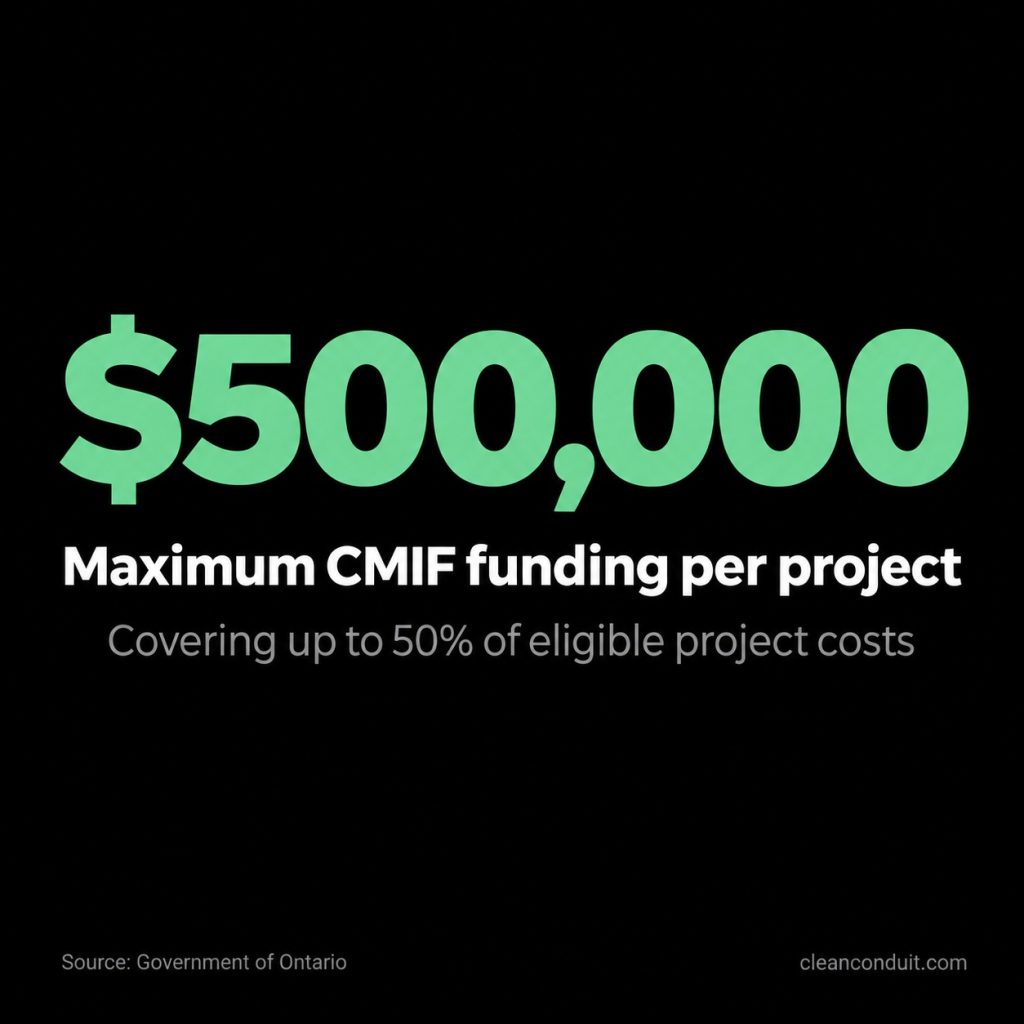
The minerals innovation fund CMIF can provide up to $500,000 per project, covering a maximum of 50% of eligible project costs. The program is designed to encourage innovation, strengthen the critical minerals supply chain, support economic growth and help Ontario develop technologies for a rapidly changing global market.
The 2026 application intake ran from June 30 to August 25, 2026 and is now closed. Companies considering future funding opportunities can use the current program requirements to identify potential innovative projects and prepare for another intake.

What Is the Ontario Critical Minerals Innovation Fund?
The Critical Minerals Innovation Fund is an Ontario program supporting research, development and commercialization projects in Ontario’s critical minerals sector.
Originally launched in November 2022, the innovation fund was launched as part of Ontario’s broader Critical Minerals Strategy. The initiative focuses on helping companies develop and commercialize a new or improved technology, technique, process or solution while strengthening Ontario’s mineral resources and mining ecosystem.
The program is intended to support projects that advance critical minerals innovation, encourage cross-sector investment, enhance collaboration and strengthen Ontario’s position in critical minerals development.
CMIF can also support projects involving collaboration between industry and other organizations, including a public-sector academic institution, public-sector research institution, non-profit organization or industry association.
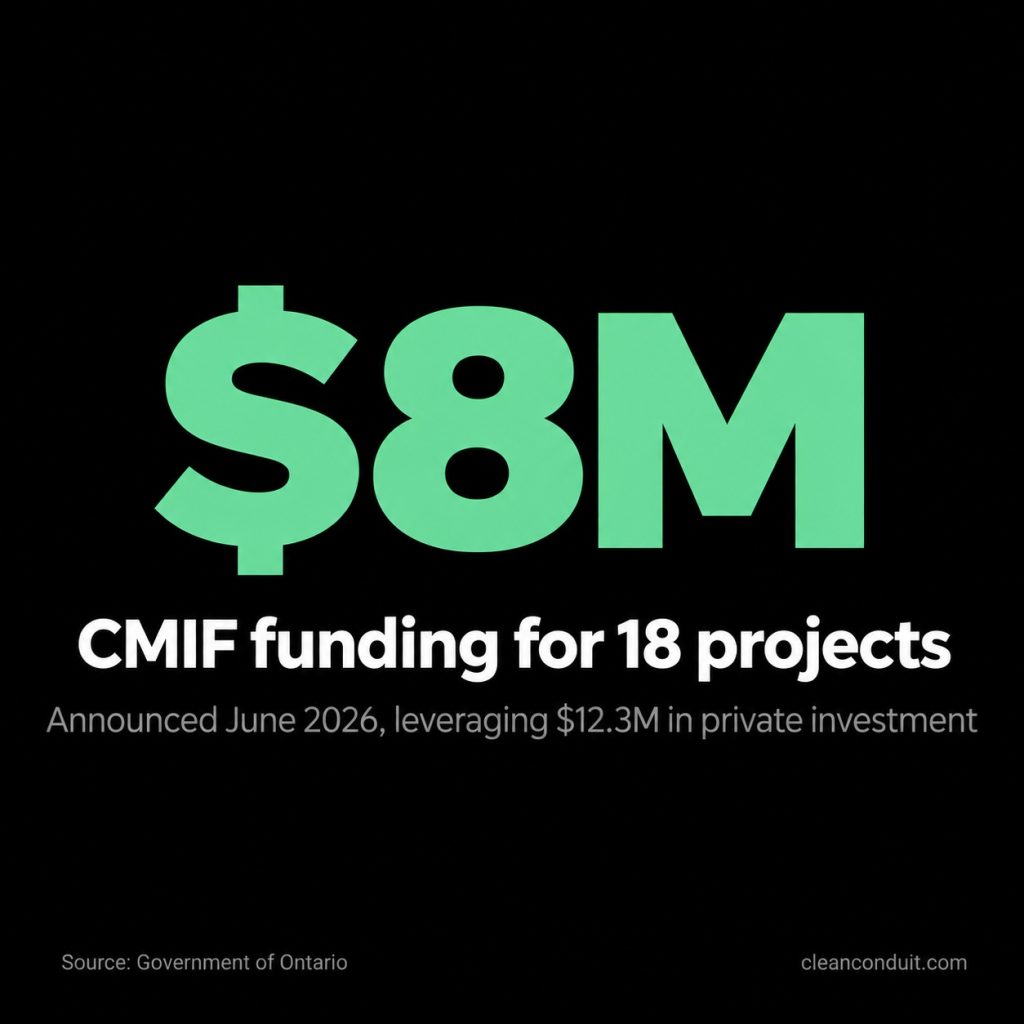
In June 2026, Ontario announced nearly $8 million in CMIF funding for 18 projects, which the provincial government said leveraged an additional $12.3 million in private-sector investment.
Critical Minerals Sector Priorities in Ontario
The critical minerals sector is important to Ontario’s plans for mining, advanced manufacturing, electric vehicles, batteries and other strategically important industries.
Ontario has significant mineral resources, particularly across Northern Ontario and more remote areas of the province. Developing these resources can require new technologies for exploration, extraction, processing and mineral recovery.
CMIF is intended to help businesses explore innovative solutions to these challenges while supporting sustainable development, investment and commercialization.
The broader objective is to help Ontario strengthen its domestic capabilities, attract mineral investment and position the province as a global leader in critical minerals development.
How Much Critical Minerals Innovation Fund Funding Is Available?
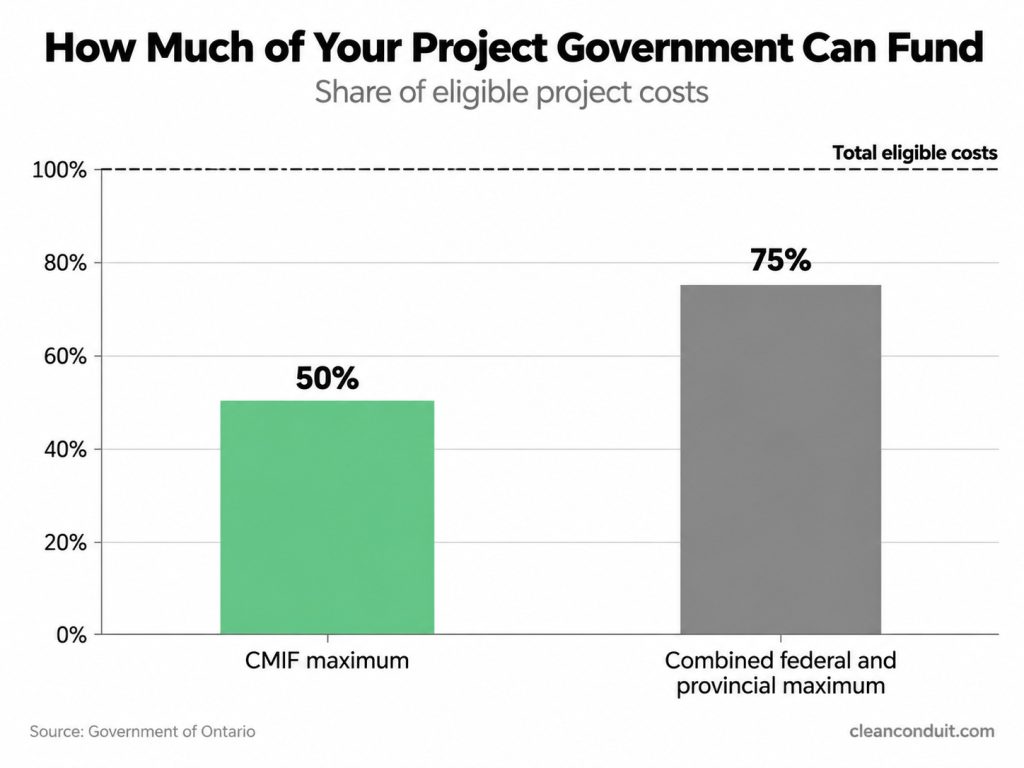
The Critical Minerals Innovation Fund can contribute up to 50% of eligible project costs, to a maximum of $500,000 per project.
A project would therefore generally require at least $1 million in eligible costs to receive the maximum $500,000 contribution.
Applicants may receive CMIF funding for only one project during each intake round.
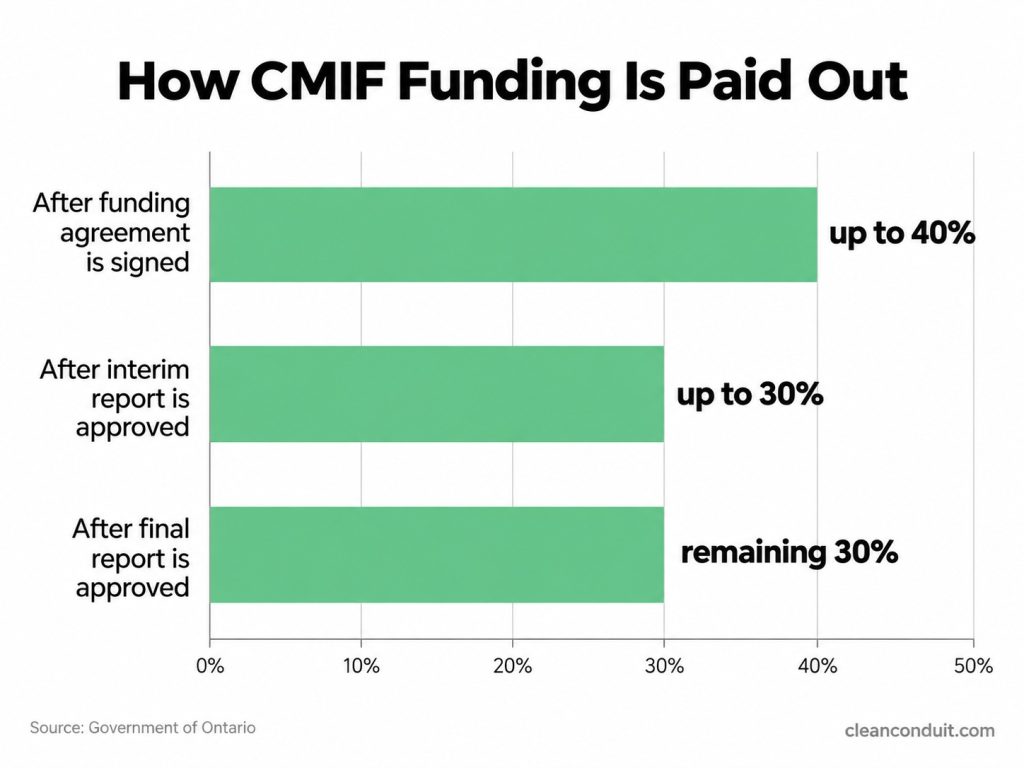
For successful applicants, funding is provided in installments tied to the project’s funding agreement and reporting requirements.
Under the current program structure, funding disbursements can include:
up to 40% of approved funding after the funding agreement is signed and all funding conditions are satisfied
up to 30% following satisfactory review of the required interim project report
the remaining funding following satisfactory review of the final project report
Businesses should consider both the total project budget and the timing of expenditures when planning how development projects will be financed.
Eligible Applicants for the Critical Minerals Innovation Fund
CMIF is primarily an industry-led program.
An eligible applicant can be a private-sector business applying independently or a private-sector business collaborating with:
a public-sector academic institution
a public-sector research institution
a non-profit organization
an association
Where two or more entities are involved in a project, one entity must serve as the lead applicant and funding recipient.
These partnerships can help enhance collaboration between industry, academia, research organizations and other participants in Ontario’s critical minerals ecosystem.
Projects can also involve specialized technology companies, engineering organizations and research and development firms with expertise relevant to mining and mineral development.
The project must take place in Ontario. The project involves research, development and/or commercialization of an innovative technology, technique, process or solution related to critical minerals.
Eligible applicants must also satisfy other CMIF requirements, including applicable restrictions related to sanctioned persons and organizations and sensitive technology research affiliations.
Critical Minerals Exploration and Deep Exploration Projects
One of CMIF’s important areas of focus is critical minerals exploration, including the development of innovative techniques for deep exploration and mining.
Ontario’s mineral deposits can present technical and economic challenges, particularly when mineral resources are located at depth or in remote areas.
Eligible projects can develop technologies that improve how companies locate, evaluate, access or develop critical mineral deposits.
Projects could involve technologies that improve mineral exploration, geological analysis, data collection, mine planning or other exploration and development activities.
By supporting a new or improved technology, CMIF can help companies address technical challenges while potentially attracting additional mineral investment into Ontario.
Critical Minerals Innovation and Development Activities
CMIF can support projects that involve research, development and commercialization.
Eligible development activities can include prototyping, technology testing, demonstration, scaling and other work required to move innovative technologies toward commercial use.
This creates opportunities for technology companies, mining businesses and development firms to undertake projects that may otherwise carry significant technical and financial risk.
Projects should clearly demonstrate how their proposed critical minerals innovation addresses an industry challenge or creates an opportunity within Ontario’s mining and minerals sector.
Battery Supply Chain Innovation
Ontario is working to strengthen an integrated battery supply chain connecting critical mineral extraction and processing with battery materials, manufacturing and recycling.
Projects in this priority area can involve technologies supporting different stages of the supply chain, including mineral extraction, mineral processing, battery materials and mineral recovery.
This can include technologies associated with recycling spent batteries and recovering critical minerals that can potentially be returned to the supply chain.
Supporting innovation throughout the battery supply chain can help Ontario attract investment and strengthen connections between mining, mineral processing and advanced manufacturing.
Ontario’s Key Priority Areas for Critical Minerals
CMIF supports projects across Ontario’s key priority areas for critical minerals innovation.
The program’s key priority areas include:
battery supply chain
innovative techniques for deep exploration and mining
mineral recovery
other innovative critical minerals projects
These key priorities give applicants several pathways for developing eligible projects.
Innovative Techniques for Deep Exploration and Mining
Projects can address challenges associated with finding and developing critical mineral deposits.
Potential projects can include innovative techniques and technologies for mineral exploration, deep exploration, mine development and related processes.
Mining Recovery and Mining Wastes
CMIF also supports innovation in mining recovery, including technologies that improve the recovery of valuable critical minerals.
The province considers whether projects can extract additional value from mining wastes when evaluating applications.
Technologies that improve mineral recovery, resource efficiency or processing could therefore align with the program where they satisfy the other eligibility requirements.
Other Innovative Projects
CMIF can also support innovative projects that strengthen Ontario’s critical minerals industry but do not fall entirely within the other categories.
Regardless of category, applicants should demonstrate how their technology or process supports Ontario’s critical minerals industry and contributes to the province’s broader critical minerals supply chain.
Eligible Costs for Critical Minerals Innovation Fund Projects
Eligible costs depend on whether a project involves research and development, commercialization or a combination of both.
For research and development projects, eligible costs can include:
prototyping, including engineering and design services
components, fabrication, materials and installation
product testing
intellectual property protection
external research and development services
contracted professional technical services or expertise
technology transfer and commercialization activities
capital assets and equipment required to test the feasibility of innovative technologies, techniques or processes
Projects may also result in new intellectual property. The potential to generate intellectual property intended to be filed or protected in Canada is one of the factors considered when applications are evaluated.
For commercialization projects, eligible costs can include:
building or renovation costs specifically required to commercialize the technology
prototype demonstration costs
engineering and design services
equipment purchases
fabrication, materials and installation
costs associated with scaling technology for mine sites or projects
product certification
external research and development services
capital assets and equipment directly related to commercialization
Applicants should demonstrate a clear connection between their eligible project costs and the research, development or commercialization activities being undertaken.
Eligible Expenses and Ineligible Project Costs
Applicants should distinguish between eligible expenses directly required to deliver the proposed innovation and normal operating expenses.
Examples of costs that are generally not eligible include:
expenses that are not directly connected to project milestones in the funding agreement
costs incurred before the applicable intake round start date
salaries and wages for individuals already being paid by the applicant
normal administrative expenses
office supplies and general office equipment
employee benefits associated with normal business operations
capital assets not specifically related to research, development or commercialization of the new technology
business development expenses such as marketing and trade shows
technology supplies not directly related to the technology being developed
Purchasing equipment or expanding normal business operations does not automatically make an expenditure eligible.
A project budget should clearly connect each proposed expense with specific activities, milestones and outcomes.
Critical Minerals Supply Chain Benefits
CMIF is intended to strengthen the critical minerals supply chain by helping innovative technologies move from development toward practical application.
Projects can potentially contribute to exploration, mining, processing, mineral recovery, batteries and advanced manufacturing.
The program can also help increase cross-sector investment by bringing together businesses, researchers, institutions and other organizations around commercialization opportunities.
Over the longer term, investment in critical minerals development can contribute to economic growth, job creation and opportunities to create good-paying jobs, including in Northern Ontario communities connected to mining and mineral development.
Critical Minerals Infrastructure Fund vs. Ontario CMIF
The Critical Minerals Infrastructure Fund and Ontario’s Critical Minerals Innovation Fund have similar names but are separate funding initiatives.
The Critical Minerals Infrastructure Fund is a federal Natural Resources Canada initiative designed to support clean energy and transportation infrastructure needed to enable the development and expansion of critical minerals projects in Canada.
Ontario’s CMIF, by comparison, focuses on research, development and commercialization of innovative technologies, techniques, processes and solutions within Ontario.
Businesses pursuing critical minerals projects should therefore distinguish between infrastructure requirements and technology innovation when evaluating potential funding opportunities.
Can CMIF Be Combined With Other Government Funding?
CMIF has important government funding stacking restrictions.
A project receiving funding from another Government of Ontario funding program generally cannot also receive CMIF funding.
There are exceptions for provincial tax credits and certain industry-wide programs.
Federal government funding can be combined with CMIF. However, combined federal and provincial government assistance cannot exceed 75% of eligible project costs.
Applicants pursuing multiple government programs should review their proposed funding structure carefully before applying.
How Are Critical Minerals Innovation Fund Applications Evaluated?
CMIF is a competitive and discretionary program. Meeting the basic eligibility requirements does not guarantee funding.
The ministry considers a range of factors when reviewing applications, including whether the project:
develops a new or improved technology or process
advances technology commercialization or prototyping
could increase investment in critical minerals exploration and development
encourages collaboration between different sectors
improves the resilience and competitiveness of Ontario’s critical minerals industry
increases critical minerals research and development in Ontario
can increase cross-sector investment
attracts investment or additional mineral development to the province
has potential to scale or expand
will generate new intellectual property intended to be filed or protected in Canada
can extract additional value from mining wastes
The ministry also considers the applicant’s demonstrated ability to complete the proposed project, including previous research and development experience and its ability to deliver projects of a comparable scale.
A strong application therefore needs to explain more than what the technology does. Applicants should establish the innovation, technical feasibility, commercial opportunity, benefits to Ontario and their ability to execute the project.

What Happens After a Critical Minerals Innovation Fund Application Is Approved?
Successful applicants must enter into a formal funding agreement with the Ontario government before funding is disbursed.
Applicants must demonstrate that the remaining financing required to complete the project has been committed.
Recipients must also maintain required insurance coverage. Current program requirements include commercial general liability insurance of $2 million per occurrence, along with other provisions specified by the ministry.
During the project, recipients must submit interim reports documenting project progress and expenditures. A final report is also required to document results and expenditures.
Recipients must maintain supporting financial documentation, including receipts, for potential audit purposes.
Applicants should also review all applicable program compliance requirements. These can include declarations or requirements concerning persons or entities listed under legislation such as the Corrupt Foreign Officials Act, where specified by the program guidelines. Applicants should review the current CMIF guidelines for the exact requirements concerning corrupt foreign officials, sanctions and other compliance matters.
Because payments are tied to the funding agreement, milestones and reporting requirements, businesses should consider project cash flow and administrative requirements before undertaking the project.
How to Apply for the Critical Minerals Innovation Fund
Applications are submitted through Transfer Payment Ontario.
The 2026 CMIF intake opened on June 30, 2026 and closed on August 25, 2026. Applications are not currently being accepted under that intake.
Companies considering a future intake can prepare by:
identifying a suitable research, development or commercialization project
confirming that the project fits one of the program’s key priority areas
establishing a detailed project scope and budget
identifying eligible costs and eligible expenses
securing the applicant’s portion of project financing
establishing measurable milestones and outcomes
documenting expected benefits to Ontario’s critical minerals sector
developing the technical and commercialization case for the innovation
Preparing these elements before another intake opens can give applicants more time to develop a complete and competitive application.
How Clean Conduit Can Help With Critical Minerals Innovation Fund Applications
The Critical Minerals Innovation Fund can provide significant support for innovative projects, but securing funding requires more than meeting the basic eligibility requirements.
Applicants need to present a strong technical, financial and commercialization case while demonstrating how their project contributes to Ontario’s critical minerals sector.
Clean Conduit helps Ontario businesses identify and pursue government funding opportunities for clean technology, advanced manufacturing, mining and critical minerals projects.
For companies considering CMIF funding, Clean Conduit can help with:
assessing eligible applicants and project eligibility
determining whether proposed costs align with CMIF requirements
structuring project scope, budgets and milestones
identifying information required for an application
developing the business, technical and commercialization case
reviewing government funding stacking opportunities and restrictions
preparing and submitting funding applications
supporting post-approval reporting and funding requirements
Preparing early can be particularly important because CMIF applicants need to demonstrate both the innovation behind their technology and the potential benefits of the project to Ontario.
If your company is developing or commercializing technology for critical minerals exploration, mineral exploration, mining, processing, mineral recovery or the battery supply chain, contact Clean Conduit to discuss the project and determine whether it could be suitable for CMIF or other government funding opportunities.
Preparing for Future Critical Minerals Innovation Funding Opportunities
Although the 2026 intake is closed, businesses working in Ontario’s critical minerals sector can begin preparing for future opportunities.
Potential applicants should identify a clearly defined innovation project, determine which costs are directly attributable to research, development or commercialization, establish measurable milestones and quantify how the project could strengthen the critical minerals supply chain.
Companies should also determine how they will finance the portion of project costs not covered by CMIF and assess whether other government funding could affect project eligibility.
For projects involving collaboration, partners should establish responsibilities early and determine which organization will act as the lead applicant and funding recipient.
Starting this work before the next intake opens can provide more time to build the technical, financial and commercialization case needed for a competitive Critical Minerals Innovation Fund application while positioning businesses to take advantage of future investment in Ontario’s critical minerals sector.
Frequently Asked Questions About the Critical Minerals Innovation Fund
CMIF can provide up to 50% of eligible project costs, with a maximum provincial contribution of $500,000 per project.
A private-sector business can apply independently. A private-sector business can also collaborate with a public-sector academic institution, public-sector research institution, non-profit organization or association.
Where two or more entities collaborate, one entity must act as the lead applicant and funding recipient.
CMIF can support eligible research, development and commercialization activities involving innovative technologies, techniques, processes and solutions for the critical minerals sector.
Yes. Innovative techniques for deep exploration and mining are among the program’s priority areas, creating opportunities for eligible critical minerals exploration and mineral exploration technologies.
Yes. The battery supply chain is one of the program’s key priority areas. Projects can involve eligible innovations across different stages of the critical minerals and battery value chain.
Projects involving the recovery of critical minerals from spent batteries may fit within the battery supply chain priority area where the project satisfies the program’s eligibility and innovation requirements.
Certain equipment and capital assets can be eligible where they are directly connected to eligible research, development or commercialization activities. Commercialization costs can include certain expenses associated with scaling technology for mine sites or projects.
Yes. Federal funding can be combined with CMIF, but combined federal and provincial government funding cannot exceed 75% of eligible project costs.
No. The federal Critical Minerals Infrastructure Fund primarily supports enabling clean energy and transportation infrastructure, while Ontario’s CMIF supports research, development and commercialization of innovative critical minerals technologies, techniques, processes and solutions.
No. CMIF is a competitive and discretionary funding program. Eligibility does not guarantee approval or a particular funding amount.